Granada Hills, CA

DC-Link Technology · CC-100 IC and IP · since 2003

Current RF recycles the impulse current your electronics throw away.

The CC-100 Power Optimizer captures the noise current that digital, RF and DC-Link power systems dump to ground, inverts it 180 degrees and feeds part of it back. It ships as an IC, as licensable IP, and inside plug-in modules for servers and vehicles.

Fig. 01 · CC-100 at a glance

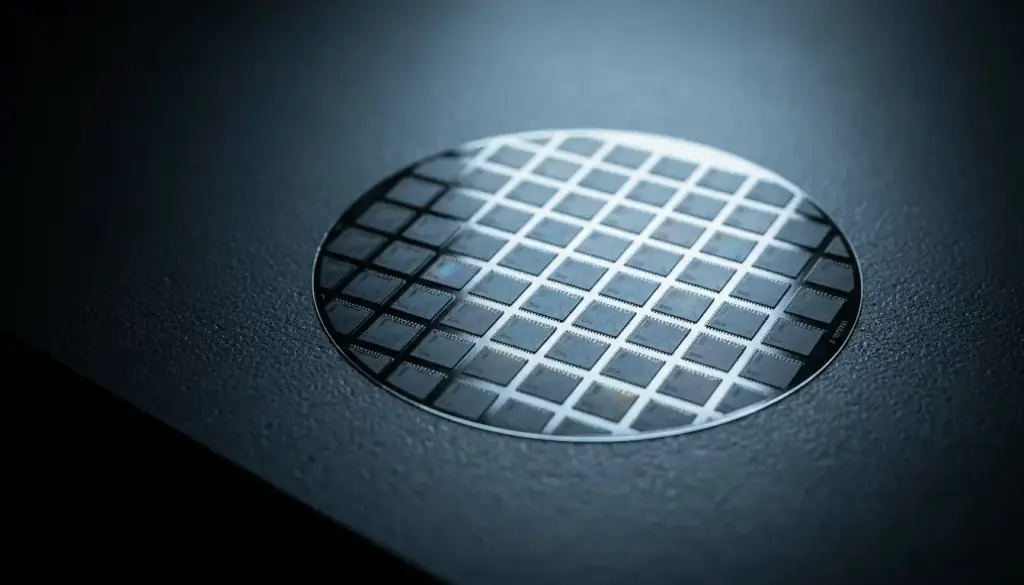
One die, 1.4 millimetres square, built to stop wasting current.

Michael Hopkins founded Current RF in 2003 on a simple premise: current-mode signal processing is spectrally cleaner and burns less power than its voltage-mode counterpart. The company began as a research house, producing the RFDAC upconversion technique and the Current Re-use Mixer.

In 2008 it found energy embedded in every digital signal processing circuit, energy that was simply being thrown away. In 2013 the CC-100 Power Optimizer went into production on GlobalFoundries’ CM018RF process to capture it and put it back to work.

Every figure in this readout is Current RF’s own published result. The datasheet behind each one is linked from the datasheet library.
Silicon

Process
GlobalFoundries CM018RF
CC-100 IC, available on request
Die size
1.4 × 1.4 mm
CC-100 Mileage Booster
In production
since 2013
About Current RF

Company-reported performance

Digital dynamic current
up to 40% lower
Company-reported, CC-100IP
Reservoir capacitance
up to 600X
CC-100IP-RF datasheet
Effective series inductance
25% lower
PowerPad datasheet
EV driving range
+10%
Company testing, EV and FCEV
ICE fuel mileage
+10% average
Company testing, 6 trials, Utah Salt Flats
Fig. 01. Company-reported figures. Read the method in the linked datasheets before relying on any one of them.
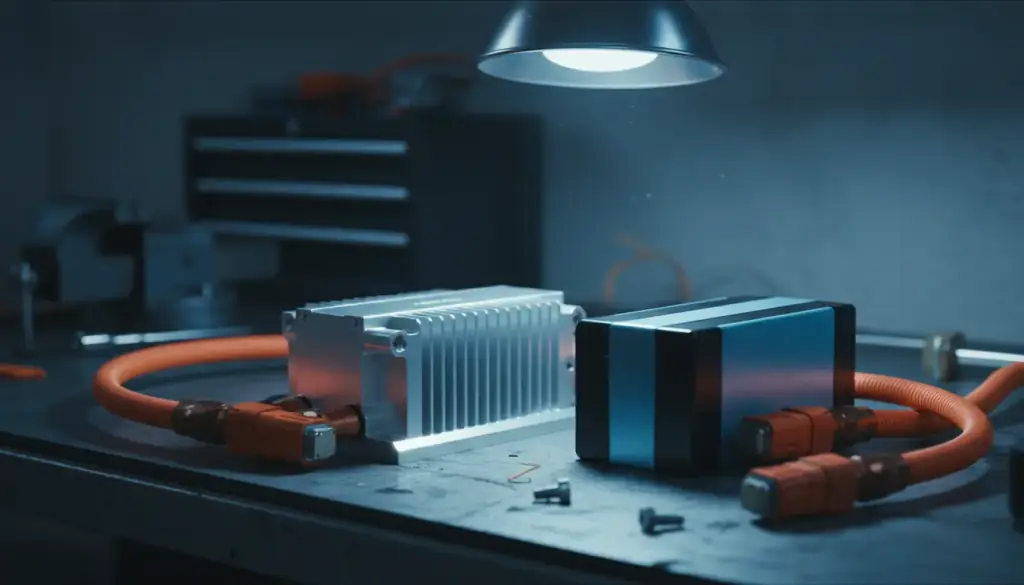
An EV traction-inverter housing, a DC-Link capacitor block and orange high-voltage cables on a workshop bench

Fig. 02 · DC-Link recycling

Big current out. Small current back in.

In an electric vehicle the CC-100 Mileage Booster sits in series with the ground terminal of the DC-Link capacitors on the traction-inverter supply. It harvests the impulse current flowing to ground, inverts it and returns a portion, so the capacitor discharges less deeply and the battery has less to replace. Current RF reports that saved charge as a 10% gain in driving range, where by its account most EV makers fight for 1 to 2%.

CC-100 on an EV DC-Link capacitorA traction inverter supply feeds a 1500 microfarad, 650 volt DC-Link capacitor. The CC-100 sits between the capacitor and ground. A big current flows down out of the capacitor; the CC-100 returns a small current back up, giving a smaller deep capacitor discharge.TRACTION INVERTER SUPPLYDC-Link1500 µF650 VBIGCURRENTSMALLCURRENTCC-1001.4 × 1.4 mm dieSMALLER DEEP CAPACITOR DISCHARGE
Fig. 02. CC-100 in series with the DC-Link ground return. Redrawn from Current RF’s published schematic.
Fig. 03 · The paperwork

23 documents you can check before you call.

Datasheets for the CC-100 IC and every IP block, plus application notes on fuel-cell EVs, autonomous-EV ICs, server power and total cost of ownership. They are published on currentrf.com and open as PDFs.

  1. 2003Founded by Michael Hopkins around current-mode signal processing.
  2. 2008Recoverable energy found in digital signal processing circuits.
  3. 2013CC-100 Power Optimizer IC in production.
  4. NowIC, IP, PowerStic, Exodus and vehicle modules.
A data-center cold aisle between two rows of server racks
Fig. 04 · Loaner program

Borrow a PowerStic. Measure it in your own racks.

Current RF lends PowerStic and Exodus units to data-center and IT teams, so the saving is measured on your machines before a purchase order. It can also come on site, run power and security testing on your systems, and show you the power and money a retrofit would save.

Payback
within 3 months
Company estimate
ROI range
3 to 10 months
Company estimate, on average
Form factor
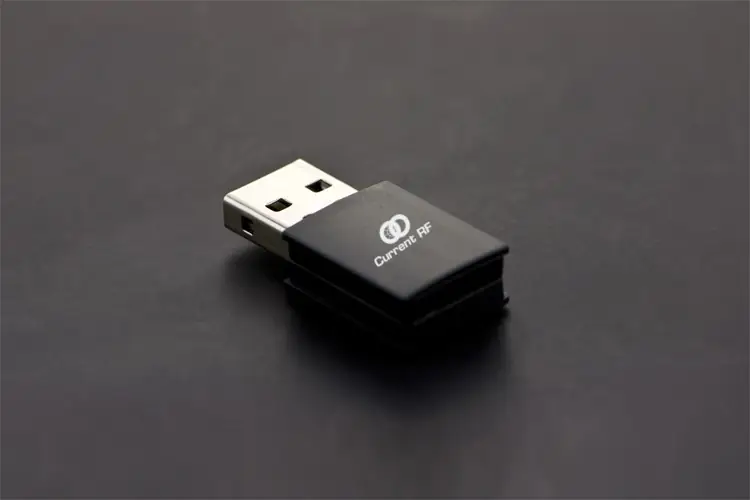
USB-A or USB-C
PowerStic
Unit price
$59.99
currentrf.com shop
Fig. 04. Payback and ROI are Current RF estimates for data-center deployments.
Questions

What engineers and buyers ask first.

Something not covered here? Write to info@currentrf.com or reach Michael Hopkins directly at Michael.Hopkins@CurrentRF.com.

Both. The CC-100 IC is produced on the GlobalFoundries CM018RF process and is available on request. The same circuit is licensed as IP for your own silicon: CC-100IP, CC-100IP-RF for on-chip RF and EMI reduction, CC-100IP-PI for impedance control, CC-100IP-MB for mileage boosting, plus the PowerPad and PowerGrid power-delivery IP.

Yes. Current RF runs a loaner program for PowerStic and Exodus so a data-center or IT team can measure the saving on its own machines first. Apply through the contact form and say how many systems you want to test.

Evaluation boards, reference designs and pricing for the IC and IP lines are quoted on request. Send an enquiry with your application, process node if it is an IP request, and expected volume, or call (209) 914-2305.

They are Current RF's own test results. The ICE figures come from six with-and-without trials on the Utah Salt Flats, and the IC and server figures are published as datasheets and application notes on the Datasheets page, so you can read the method before you rely on a number.

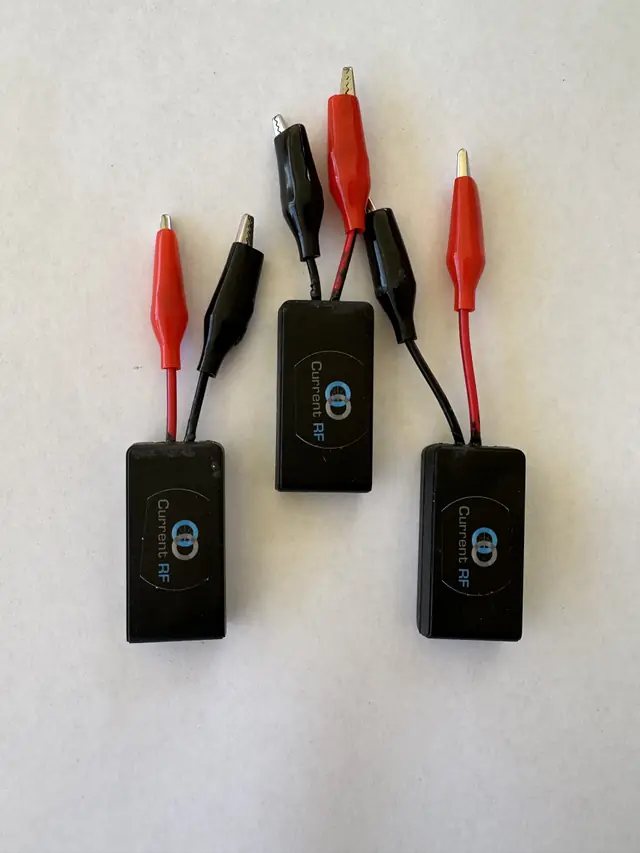
It clips across the vehicle's battery terminals, much like connecting jumper cables. No tools and no wiring changes. The EV Mileage Booster is different: it sits in series with the ground terminal of the DC-Link capacitors, so it is a job for the vehicle's power-electronics designer.

The unused battery-charging port of an e-bike, e-scooter or e-skateboard, while you ride. Each consumer module is $59.99.
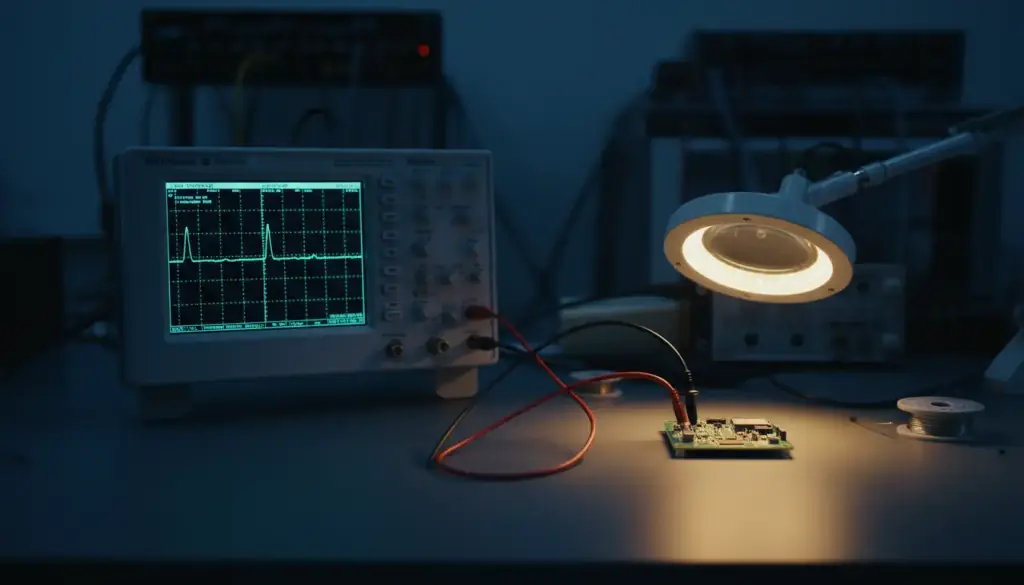
An oscilloscope showing current impulses beside an evaluation board under a magnifier lamp
Fig. 05 · Talk to an engineer

Send Current RF your power problem.

Evaluation boards, reference designs, IP licensing, IC pricing or a power analysis of your system. Tell Current RF what you are building and Michael Hopkins’ team will come back with what fits.

11624 Paso Robles Ave. Granada Hills, CA 91344 · info@currentrf.com