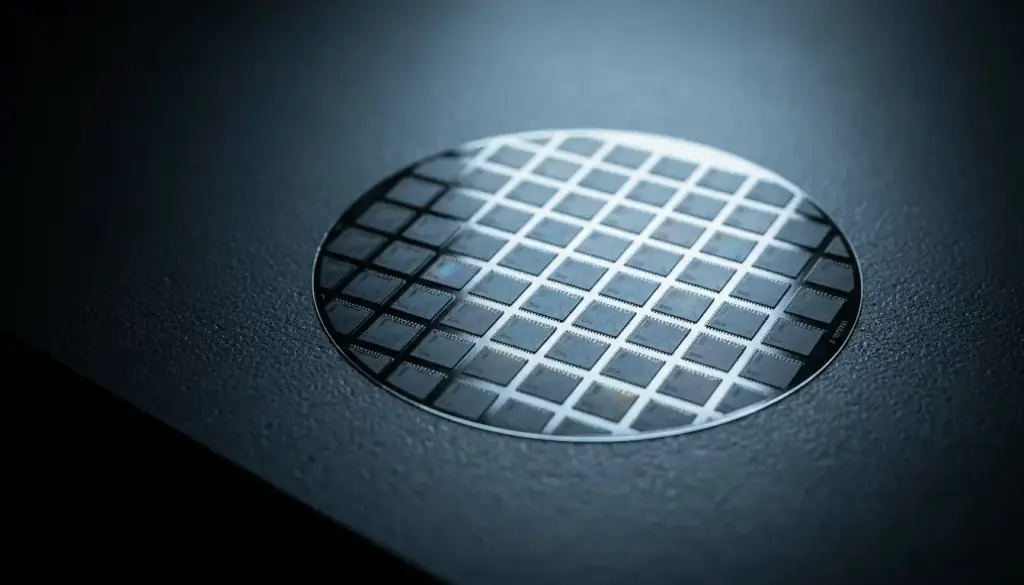
Current-mode signal processing since 2003
Current RF began as a research company working on current-mode circuits. A 2008 discovery led to the CC-100 IC in 2013, and the work since then is power reduction at the IC, the board and the vehicle.
- Founded
- 2003
- About page
- Founder
- Michael Hopkins
- About page
- Discovery
- 2008
- About page
- CC-100 in production
- 2013
- About page
- Process
- GlobalFoundries CM018RF
- Products page
- Location
- Granada Hills, CA
- Company address
The founding premise: current mode
“CurrentRF was founded by Michael Hopkins in 2003 on the premise that Current Mode Signal Processing is spectrally cleaner and burns less power than its voltage mode counterparts.”
Most analog and mixed-signal design works in voltage. Current Mode Signal Processing carries the signal as current instead. Current RF started from the position that this approach produces a cleaner spectrum and a lower power budget, and it built the company around testing that position in silicon.
That premise is still the thread through the product line. The CC-100 family works on impulse current in the power grid of a digital circuit, and the company's RF IP is described alongside it on the integrated circuits page.
The research years: RFDAC and the Current Re-use Mixer
The company was originally a research-based organization. Its early work produced a new DAC upconversion technique and design called the RFDAC. A spinoff from that work was the Current Re-use Mixer.
The research years set the direction for what followed. Current RF kept working on current-mode circuits and on how current moves through them, and the next discovery came from digital signal processing circuits.
2008: a discovery, and in 2013 the CC-100
“In 2008, the Company discovered a new form of energy embedded in all forms of Digital Signal Processing Circuits.”
The discovery was exploited over the following years. In 2013 it reached production as the CC-100 Power Optimizer, called the PowerOp: an integrated circuit that captures “thrown away” energy present in digital signal processing systems and recycles it back into the system. The company states the goal as overall system power reduction.
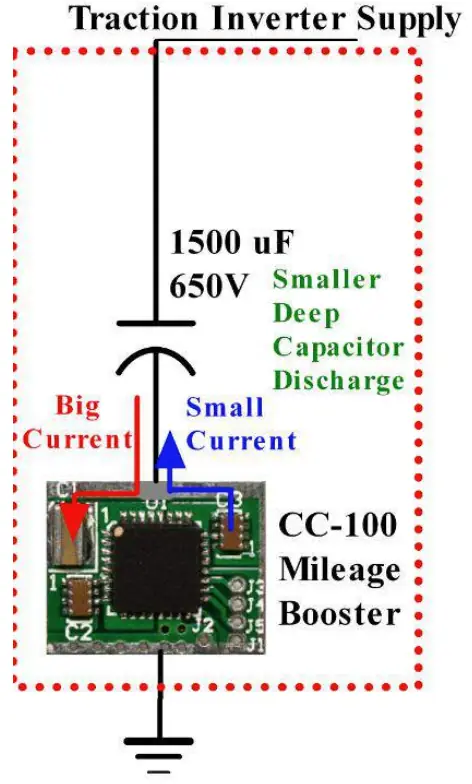
In practice the CC-100 sits on the path of impulse current, for example the ground side of a DC-Link capacitor. It inverts that current and feeds a portion back to its input, which cancels part of the original impulse. The CC-100 is fabricated on the GlobalFoundries CM018RF process and is available on request. Datasheets for the part and its derivatives are on the datasheets page.
Two derivatives: PowerStic and Exodus
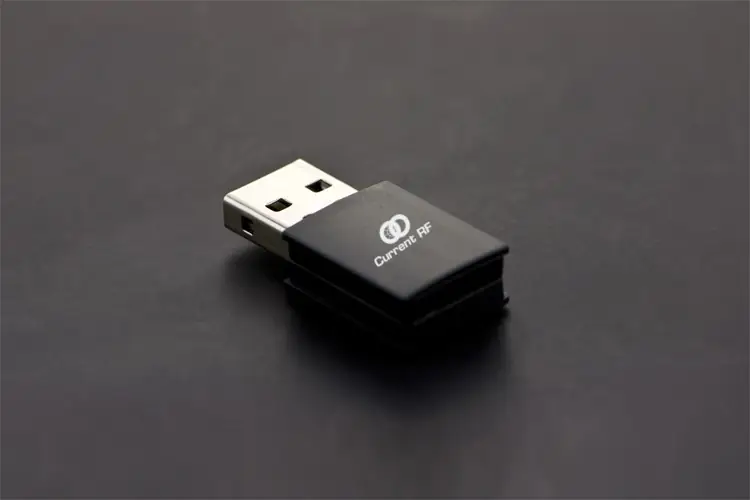
The PowerOptimizer IC has spawned two derivative products, the PowerStic and Exodus. Both are USB plug-in products aimed at the general consumer market. The PowerStic is offered in USB-A and USB-C, and Current RF sells it at $59.99 each.
The same devices are used in a second way. On-site power testing for data-center and business systems can measure the saving first, with a loaner PowerStic or Exodus, before anyone buys. Savings figures for these devices are Current RF's own estimates and test results, and are not independently verified.
Timeline
- 2003Michael Hopkins founds the company on the premise that current-mode signal processing is spectrally cleaner and uses less power than voltage mode.
- 2008The company identifies a form of energy embedded in digital signal processing circuits and begins to exploit it.
- 2013The CC-100 Power Optimizer (PowerOp) IC enters production, built on the GlobalFoundries CM018RF process.
- TodayCC-100IP family, PowerPad and PowerGrid IP, RF IP, evaluation boards, loaners, and USB and DC-Link modules for consumers.
Dates and the sequence above are taken from Current RF’s own About page. The company publishes no team size, customer list, patent list or press coverage, so none is stated here.
How Current RF works with customers today
For IC designers, Current RF licenses IP: the CC-100IP family, the PowerPad and PowerGrid power-grid IP, and the RF blocks CC-201IP through CC-205IP. The company can power-analyze your ICs and systems, then design or retrofit its IP into the device. Evaluation boards and reference designs are available on request.
For data-center and business systems, Current RF offers on-site power and security testing, and a loaner program for the PowerStic and Exodus. For consumers, modules are sold in the shop at $59.99 each: the EV Mileage Booster, the ICE, Diesel and Hybrid Mileage Booster, the PowerStic and the Range Extender Accessory. The full list is on the products page.
To start a conversation, use the contact form or write to info@currentrf.com. Michael Hopkins is the founder and the direct contact.